Andrés F.
Rodríguez

Development economist · Impact & Learning Manager, Stanford Impact Labs
PHD IN ECONOMICS, STANFORD · BA & MA, UNIVERSIDAD DE LOS ANDES
Portrait of Andrés F. Rodríguez

I'm a development economist who studies governance and public goods through field experiments in Sierra Leone, Zambia, and Colombia. At Stanford Impact Labs — a research grantmaking organization — I lead impact measurement across a portfolio of applied social science. Research on one side, practice on the other; this site is the bridge.

NOW: MEASURING THE IMPACT OF A $43M RESEARCH PORTFOLIO
01 · FIVE WORKING PAPERS

Research

Governance, public goods, beliefs and education — Sierra Leone, Zambia, Colombia.

01 · FIVE WORKING PAPERS · 2019–PRESENT

Research

/
WORKING PAPER · RANDOMIZED EVALUATION · ZAMBIA · 2026

An Experiment in Decentralization: Evidence from the Zambian Constituency Development Fund

with Jeremy Bowles, Katherine Casey, Danielle Handel

Zambia's Constituency Development Fund has expanded twenty-fold since 2021. In partnership with the government, we randomize giving districts more control over project selection and procurement: officials get projects approved substantially faster, shift tenders into simpler processes, and spending aligns modestly better with what communities ask for.

IGC PROJECTIGC POLICY DOCPROJECT AT SIL

We present initial results from a randomized evaluation that varies the degree of decentralization within Zambia's Constituency Development Fund, which has expanded twenty-fold since 2021. In partnership with the government, we randomly assigned districts to a reform with two components: reducing central government influence over local community project selections, and expanding districts' discretion to use light-touch procurement processes. District officials internalized both reforms, obtaining project approvals substantially faster and shifting hundreds of tenders into simpler procurement processes. Increased discretion modestly improves the sectoral alignment of selected projects with local demand while, at a minimum, not exacerbating existing biases in the spatial allocation of resources. Reduced bidding on tenders appears to reflect a reduction in non-competitive bids rather than a consequential reduction in competition. Ongoing and future data collection seeks to evaluate downstream outcomes on project construction, utilization, financial management, and electoral accountability.

WORKING PAPER · FIELD EXPERIMENT · SIERRA LEONE · 2024

Informal Taxation in Rural Sierra Leone

When chiefs mobilize labor for public goods, who actually pays? Randomizing how contributors are selected — chiefs versus lotteries versus progressive surveys — shows chiefs distort behavior slightly less than the alternatives, but their taxes still land hardest on poorer households, who accept lower wages to avoid the call.

IGC POLICY BRIEF

This paper investigates the relative merit of traditional leaders in promoting cooperative behavior when informally taxing citizens' labor in low-income states and whether this comes at the expense of relatively poor households. I designed a field experiment to measure whether citizens distort their behavior when facing informal taxation schemes by engaging in costly actions to avoid contributing their labor to a public good. I randomize communities into different methods to select contributors and compare the status quo of selection by chiefs versus two alternatives: random lotteries and progressive selection based on household surveys. Results show that chiefs' informal taxes distort individual behavior slightly less than the alternative mechanisms, revealing that chiefs can indeed promote pro-social behavior but not in a magnitude suggesting large efficiency gains. However, chief selection leads to less overall participant effort during the experiment, suggesting that chiefs' involvement does alter people's incentives during income-generating tasks. When focusing on differences by wealth, I also find chiefs do generate distortions among this group, which are more likely to accept lower wages to avoid being informally taxed by chiefs. On the other hand, progressive selection is slightly more distortionary than chief selection in terms of people avoiding informal taxes through costly actions, shifting costs toward people with intermediate levels of wealth.

REGISTERED REPORT · JDE · FIELD EXPERIMENT · SIERRA LEONE · 2026

Candidate Entry Into Local Government

with Katherine Casey, Abou Bakarr Kamara, Niccolò Meriggi

Are there better potential candidates for local office — and will parties run them? Community nominations plus technocratic screening surface higher-quality, broadly supported people, and a quarter of top nominees enter politics. The bottleneck isn't supply: party gatekeepers still favor their own incumbents.

IGC BLOG

The competence of public officials affects state performance and economic growth, yet building this capacity is difficult: it requires protocols to identify more capable, representative individuals; their willingness to run for office; and party interest in supporting their candidacies. We evaluate an experiment designed to parse these problems of identification, entry and gatekeeping in advance of the 2023 local elections in Sierra Leone. A combination of community nominations and technocratic screening identifies individuals who are substantially higher quality and enjoy broader popular support than both incumbents and status quo aspirants. One quarter of top nominees formally enter politics, positively self-selected on quality, and their entry improves the maximum quality observed in candidate applicant pools. Party gatekeepers, however, are not more likely to select these capable, popular nominees and instead favor their own re-running incumbents. Results suggest that the challenge for political renewal is less about supply than demand in this context: there are indeed better potential candidates out there who are willing to run, but institutional party incentives work against selecting them.

WORKING PAPER · FIELD EXPERIMENT · COLOMBIA · 2026

The Limits of Exposure: Socioeconomic Diversity and Teamwork in College

with Leopoldo Fergusson, Juliana Londoño-Vélez

Can structured collaboration across class lines in college build economic connectedness? In a field experiment at Universidad de los Andes, socioeconomically diverse teams meet less, report lower satisfaction, and are less willing to work together again — while pairing students with a friend mainly benefits low-SES students.

Can structured cross socioeconomic status (SES) collaboration in elite universities build economic connectedness? We study this question in a field experiment embedded in a required undergraduate course at Universidad de los Andes during a period of rapidly rising low-SES enrollment. We map within-section friendship networks and elicit students' willingness to trade off working with a friend for working with a higher-performing non-friend, using randomized monetary incentives and randomized SES information about the potential teammate. We then randomly assign students to essay teams that vary in SES composition and instrumentally pair them with a random friend to work with. Baseline networks display strong SES homophily. Making SES salient increases high-SES students' preference to work only with friends, while low-SES students' choices become more homophilous at the top of the performance distribution. In realized teams, SES diversity reduces meeting and satisfaction and lowers willingness to work together again, with little effect on essay grades. These frictions persist in a follow-up survey, while friend-pairing mainly benefits low-SES students.

WORKING PAPER · LAB-IN-THE-FIELD · COLOMBIA · 2024

Too Much or Too Little Faith in Success? Experimental Evidence from Colombian Entrepreneurs

with Réka Zempléni

Why do so many low-potential businesses launch anyway? In an experiment with current, past, and aspiring Colombian entrepreneurs, overconfidence among lower-potential founders drives over-entry — and telling people their skill-based odds discourages some of them, while high-potential founders keep entering despite high failure rates.

The high failure rate of new businesses in Colombia suggests a high entry rate among entrepreneurs with only low success potential. We test the hypothesis that this may be driven by the tendency to incorrectly estimate their success likelihoods. Specifically, we test the relative roles of ambiguity preferences, confidence, and optimism and whether there are heterogeneities in these biases with regard to the true underlying potential for success as an entrepreneur. We recruit current, past, and aspiring Colombian entrepreneurs to participate in an online experiment. As part of the study, we simulate the decision to become an entrepreneur by having participants make an "entry decision" about playing an entrepreneurship-related game for stakes or taking a certain payment. We vary the available information to disentangle the potential behavioral biases leading to over-entry. We find a high degree of entry at the baseline, with over 80% of participants choosing to play the game for stakes across the board that is statistically significantly higher than what risk preferences can account for combined with the expectation of 20% succeeding. Providing information about the average likelihood of success encourages the lower potential participants to enter more, closing the slight gap between them and their higher potential counterparts at baseline. Information about the individual-specific skill-based success likelihood discourages some lower potential individuals, in some circumstances, suggesting over-confidence. Sharing information about the role of luck may discourage the lower potential participants, providing evidence against high levels of optimism or risk-seeking in this group. Taken together, the findings show that overconfidence among the lower potential individuals generates over-entry in this group, but the resulting high failure rate does not deter high-potential individuals' entry.

SCROLL ROTATES THE WHEEL
2026

Candidate Entry Into Local Government

Are there better potential candidates for local office — and will parties run them? Community nominations plus technocratic screening surface higher-quality, broadly supported people, and a quarter of top nominees enter politics. The bottleneck isn't supply: party gatekeepers still favor their own incumbents.

IGC BLOG

The competence of public officials affects state performance and economic growth, yet building this capacity is difficult: it requires protocols to identify more capable, representative individuals; their willingness to run for office; and party interest in supporting their candidacies. We evaluate an experiment designed to parse these problems of identification, entry and gatekeeping in advance of the 2023 local elections in Sierra Leone. A combination of community nominations and technocratic screening identifies individuals who are substantially higher quality and enjoy broader popular support than both incumbents and status quo aspirants. One quarter of top nominees formally enter politics, positively self-selected on quality, and their entry improves the maximum quality observed in candidate applicant pools. Party gatekeepers, however, are not more likely to select these capable, popular nominees and instead favor their own re-running incumbents. Results suggest that the challenge for political renewal is less about supply than demand in this context: there are indeed better potential candidates out there who are willing to run, but institutional party incentives work against selecting them.

2026

An Experiment in Decentralization: Evidence from the Zambian Constituency Development Fund

Zambia's Constituency Development Fund has expanded twenty-fold since 2021. In partnership with the government, we randomize giving districts more control over project selection and procurement: officials get projects approved substantially faster, shift tenders into simpler processes, and spending aligns modestly better with what communities ask for.

IGC PROJECTIGC POLICY DOCPROJECT AT SIL

We present initial results from a randomized evaluation that varies the degree of decentralization within Zambia's Constituency Development Fund, which has expanded twenty-fold since 2021. In partnership with the government, we randomly assigned districts to a reform with two components: reducing central government influence over local community project selections, and expanding districts' discretion to use light-touch procurement processes. District officials internalized both reforms, obtaining project approvals substantially faster and shifting hundreds of tenders into simpler procurement processes. Increased discretion modestly improves the sectoral alignment of selected projects with local demand while, at a minimum, not exacerbating existing biases in the spatial allocation of resources. Reduced bidding on tenders appears to reflect a reduction in non-competitive bids rather than a consequential reduction in competition. Ongoing and future data collection seeks to evaluate downstream outcomes on project construction, utilization, financial management, and electoral accountability.

2024

Informal Taxation in Rural Sierra Leone

When chiefs mobilize labor for public goods, who actually pays? Randomizing how contributors are selected — chiefs versus lotteries versus progressive surveys — shows chiefs distort behavior slightly less than the alternatives, but their taxes still land hardest on poorer households, who accept lower wages to avoid the call.

IGC POLICY BRIEF

This paper investigates the relative merit of traditional leaders in promoting cooperative behavior when informally taxing citizens' labor in low-income states and whether this comes at the expense of relatively poor households. I designed a field experiment to measure whether citizens distort their behavior when facing informal taxation schemes by engaging in costly actions to avoid contributing their labor to a public good. I randomize communities into different methods to select contributors and compare the status quo of selection by chiefs versus two alternatives: random lotteries and progressive selection based on household surveys. Results show that chiefs' informal taxes distort individual behavior slightly less than the alternative mechanisms, revealing that chiefs can indeed promote pro-social behavior but not in a magnitude suggesting large efficiency gains. However, chief selection leads to less overall participant effort during the experiment, suggesting that chiefs' involvement does alter people's incentives during income-generating tasks. When focusing on differences by wealth, I also find chiefs do generate distortions among this group, which are more likely to accept lower wages to avoid being informally taxed by chiefs. On the other hand, progressive selection is slightly more distortionary than chief selection in terms of people avoiding informal taxes through costly actions, shifting costs toward people with intermediate levels of wealth.

2026

The Limits of Exposure: Socioeconomic Diversity and Teamwork in College

Can structured collaboration across class lines in college build economic connectedness? In a field experiment at Universidad de los Andes, socioeconomically diverse teams meet less, report lower satisfaction, and are less willing to work together again — while pairing students with a friend mainly benefits low-SES students.

Can structured cross socioeconomic status (SES) collaboration in elite universities build economic connectedness? We study this question in a field experiment embedded in a required undergraduate course at Universidad de los Andes during a period of rapidly rising low-SES enrollment. We map within-section friendship networks and elicit students' willingness to trade off working with a friend for working with a higher-performing non-friend, using randomized monetary incentives and randomized SES information about the potential teammate. We then randomly assign students to essay teams that vary in SES composition and instrumentally pair them with a random friend to work with. Baseline networks display strong SES homophily. Making SES salient increases high-SES students' preference to work only with friends, while low-SES students' choices become more homophilous at the top of the performance distribution. In realized teams, SES diversity reduces meeting and satisfaction and lowers willingness to work together again, with little effect on essay grades. These frictions persist in a follow-up survey, while friend-pairing mainly benefits low-SES students.

2024

Too Much or Too Little Faith in Success? Experimental Evidence from Colombian Entrepreneurs

Why do so many low-potential businesses launch anyway? In an experiment with current, past, and aspiring Colombian entrepreneurs, overconfidence among lower-potential founders drives over-entry — and telling people their skill-based odds discourages some of them, while high-potential founders keep entering despite high failure rates.

The high failure rate of new businesses in Colombia suggests a high entry rate among entrepreneurs with only low success potential. We test the hypothesis that this may be driven by the tendency to incorrectly estimate their success likelihoods. Specifically, we test the relative roles of ambiguity preferences, confidence, and optimism and whether there are heterogeneities in these biases with regard to the true underlying potential for success as an entrepreneur. We recruit current, past, and aspiring Colombian entrepreneurs to participate in an online experiment. As part of the study, we simulate the decision to become an entrepreneur by having participants make an "entry decision" about playing an entrepreneurship-related game for stakes or taking a certain payment. We vary the available information to disentangle the potential behavioral biases leading to over-entry. We find a high degree of entry at the baseline, with over 80% of participants choosing to play the game for stakes across the board that is statistically significantly higher than what risk preferences can account for combined with the expectation of 20% succeeding. Providing information about the average likelihood of success encourages the lower potential participants to enter more, closing the slight gap between them and their higher potential counterparts at baseline. Information about the individual-specific skill-based success likelihood discourages some lower potential individuals, in some circumstances, suggesting over-confidence. Sharing information about the role of luck may discourage the lower potential participants, providing evidence against high levels of optimism or risk-seeking in this group. Taken together, the findings show that overconfidence among the lower potential individuals generates over-entry in this group, but the resulting high failure rate does not deter high-potential individuals' entry.

WORK SUPPORTED BY J-PAL, THE INTERNATIONAL GROWTH CENTRE, THE WEISS FUND & THE STANFORD KING CENTER
UPDATED AUG 2026
02 · CASE STUDIES, ESSAYS & TOOLS

Practice

How impact measurement works in the field — and the tools I build doing it.

02 · CASE STUDIES, ESSAYS & TOOLS

Practice

Impact measurement as it actually happens: real cases from portfolio work, and essays on evaluation that gets used rather than performed.

01 · APPLIED AI PILOT

AI-assisted grant review

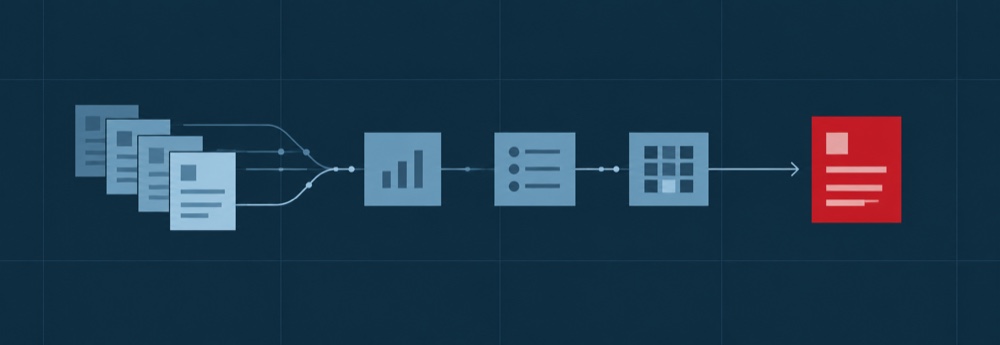
A multi-agent AI pipeline that reviews research proposals, benchmarked against historical human-reviewer decisions — designed, piloted, and formally evaluated at Stanford Impact Labs. Presented at AFIRE, the Impact Funders Forum, and the Canadian Institutes of Health Research (CIHR).

benchmarked against human reviewers
PILOTED & EVALUATED AFIRE TALK ↗ OPEN ↗
02 · TALKS & MENTORING

Field research at every scale

Supporting graduate students through experimental field research at every scale — from large partnerships with government entities to smaller lab-in-the-field data collection — and what each approach means for the kind of knowledge it can produce. Guest speaker for Stanford courses POLISCI 150C/355C and EDUC 318.

ONGOING OPEN ↗
SCROLL FOR MORE →
IN PROGRESS — CASE STUDIES AND ESSAYS LAND HERE
Scoring a portfolio of research bets CASE STUDY
Evaluation that gets used ESSAY
A theory of change you can test ESSAY
UPDATED AUG 2026